Inauguration of the Trémentines reverse flow facility
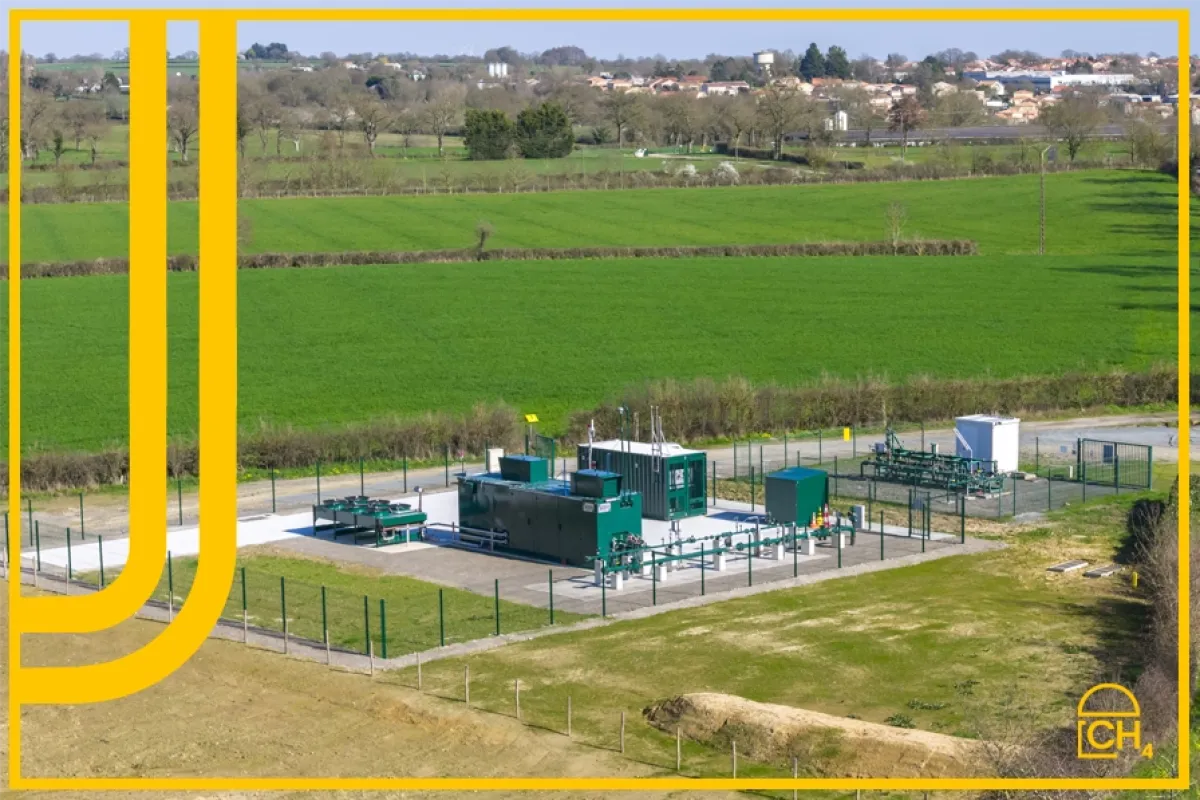
NaTran inaugurated the Trémentines reverse flow facility on Wednesday 23 September 2026 – the first of its kind in Maine-et-Loire, built in collaboration with Soregies, a local gas distribution company. This opening ceremony was organised in collaboration with the project’s partners: the municipality of Trémentines, Mauges Communauté, the Maine-et-Loire Intermunicipal Energy Syndicate (Siéml) and the operators of anaerobic digestion plants in the region.
Role of the Trémentines reverse flow facility
The increase in the production of biomethane fed into the networks requires adjustments to ensure that where surplus production cannot be consumed directly via the distribution networks due to seasonal fluctuations in consumption, it can be fed back into the transmission network to meet the needs of other neighbouring consumption areas or stored for future use.
>>> Anaerobic digestion: the key role of reverse flow facilities: article, infographic and animation
This is the role of the reverse flow facility in Trémentines (Maine-et-Loire), which in the short term is capable of accommodating nearly 70 GWh/year of biomethane, equivalent to the gas consumption of 6,000 households. By enabling connection to this facility, the reverse flow facility paves the way for other biomethane production units to be developed in the region, with a capacity of around 100 GWh per year. The investment in the Trémentines reverse flow facility amounts to 2.5 million euros, and is financed by NaTran.
This reverse flow facility is the first plant of its kind to be built in the Maine-et-Loire department. The Pays de la Loire region now has seven in operation: Pouzauges (85), Craon (53), Saint-Aubin-des-Châteaux (44), Saint-Nicolas-de-Redon (44), La Roche-sur-Yon (85), Arconnay (72) and Trémentines (49).

Paving stones incorporating recycled oyster shells
Trémentines, an eco-designed station
The history of the Mauges biogas pipeline and the Trémentines reverse flow facility project
As far back as 2016, discussions began in the Mauges region regarding the development of a gas network to provide opportunities for the injection of biogas into the distribution network and, in so doing, to encourage the emergence of anaerobic digestion projects led by local farmers. This is how the “Mauges biogas corridor” project came about – a multi-stakeholder initiative driven by local authorities, network operators, consumers and producers in the region.
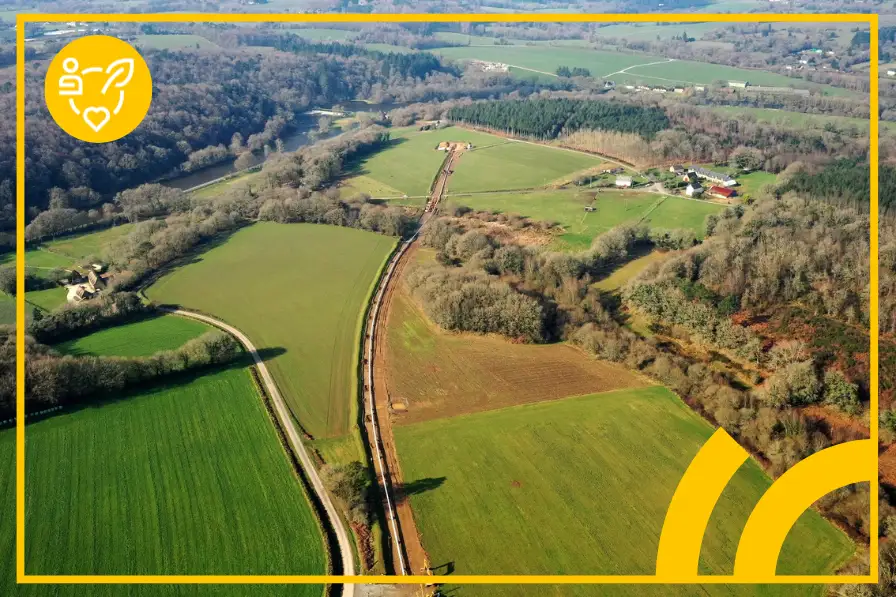
This biogas pipeline was inaugurated on 6 June 2018 in Saint-Florent-le-Vieil, following 10 months of works led by the Sorégies distribution network operator, representing a total investment of 3 million euros. The network, stretching some thirty kilometres between Trémentines and Saint-Florent-le-Vieil, supplies energy to a gas-intensive industrial operator (Lactalis) and collects biogas produced across the Mauges region, with the aim of achieving a 70 per cent share of green gas in the Mauges distribution networks by 2030.
This project was launched as part of the "West Grid Synergy", smart grid project, which aims to facilitate the integration of biomethane into the networks through new network management techniques and innovative gas infrastructure. The final stage for this biogas ecosystem involved the installation of a reverse flow station, which would enable any biomethane not consumed locally to be fed into the NaTran transmission network and transported to other consumption areas in which production exceeded local consumption.
The development of renewable gas in the Mauges region
The Mauges region is very active in the field of anaerobic digestion, with three such plants connected to the Sorégies distribution network: the two Métha-Mauges plants in Jallais and Villeudieu La Blouère, which were commissioned in late 2022 and early 2023, and the Loire Mauges Energie plant in La Pommeraye, which came on stream in late December 2025.
In 2025, 44 GWh of biomethane was fed into the grid, accounting for 46 per cent of gas consumption on the Sorégies networks. With the commissioning of the Loire Mauges Energies anaerobic digestion plant, the share of biomethane is rising to 60 per cent as of 2026: proportionally speaking, 10 times higher than the national average.
This biomethane, produced within the region, is mainly consumed locally by all customers, including households, businesses, local authorities and industrial customers. It also serves to facilitate carbon-free transport through the bioNGV station at La Pommeraye, which is used by local transport operators.
And in the Pays de la Loire region
With 81 anaerobic digestion plants already feeding their output into the gas networks, the Pays de la Loire region is realising its potential for renewable gas production, with an installed capacity of over 1.3 TWh per year (equivalent to the gas consumption of 110,000 households). This capacity is expected to double shortly with the integration of planned facilities for which a connection study has been requested (89 additional projects, totalling a further 1.7 TWh).
The Maine-et-Loire department is contributing to the regional drive with 21 operational sites, representing an annual production capacity of 324 GWh (13.2 per cent of the department’s gas consumption).
The development of the Trémentines reverse flow facility forms part of the gas network operators’ strategy, which aims – through the expansion of their infrastructure – to facilitate the use of renewable and local energy sources, thereby helping to achieve carbon neutrality by 2050 and ensuring that 100 per cent of the gas consumed in France comes from renewable and local sources.
Anaerobic digestion: a local renewable energy source
The production of renewable gas, a local energy source derived from our regions and agricultural sectors, is growing rapidly, with a knock-on impact on the traditional design of gas infrastructure.
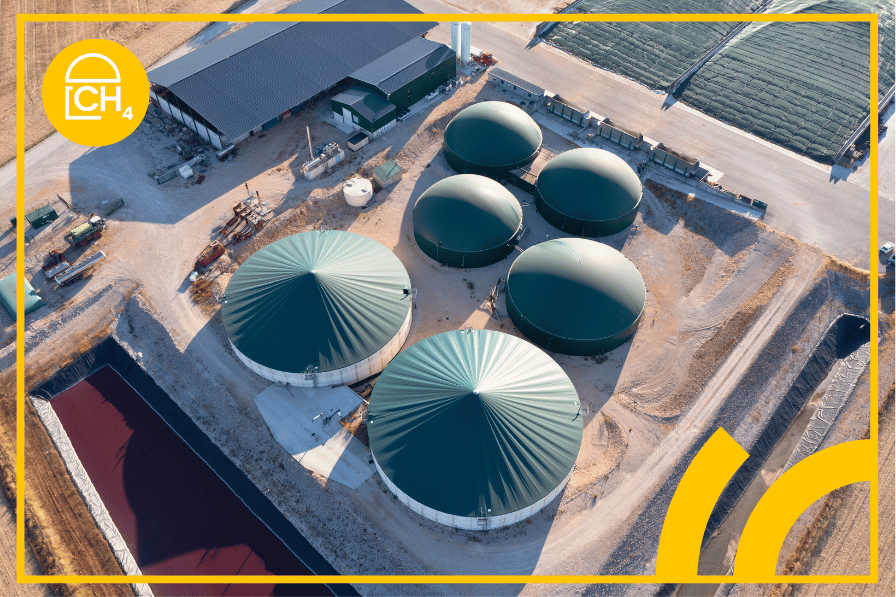
Through the process of anaerobic digestion, livestock effluent (slurry, manure), crop residues, agri-food waste, sewage sludge and bio-waste are turned into a resource: they are converted into biogas. After purification, it meets the same quality standards as natural gas and can therefore be fed into the networks. It is then known as biomethane. Just like natural gas, it is used for heating and cooking – but that’s not all. When used as a fuel (bioNGV), it offers an economical and environmentally friendly solution, with applications for the transport of goods and people in particular. As well as providing 100 per cent renewable and locally sourced energy, the anaerobic digestion process produces digestate: a by-product that can be used as an organic fertiliser, thereby reducing the use of synthetic chemical fertilisers.
This form of circular economy makes a tangible contribution to the region’s energy transition through the generation of renewable energy and the reduction of greenhouse gas emissions. It also promotes more sustainable and long-term agriculture, and the creation of jobs that cannot be relocated. As a reminder, the latest multi-year energy plan, published in February 2026, sets the target for biomethane injection into the networks at 44 TWh by 2030.
>>> Gas networks & land-use planning: supporting energy transition
Publications