


Our vision for a carbon-neutral world by 2050
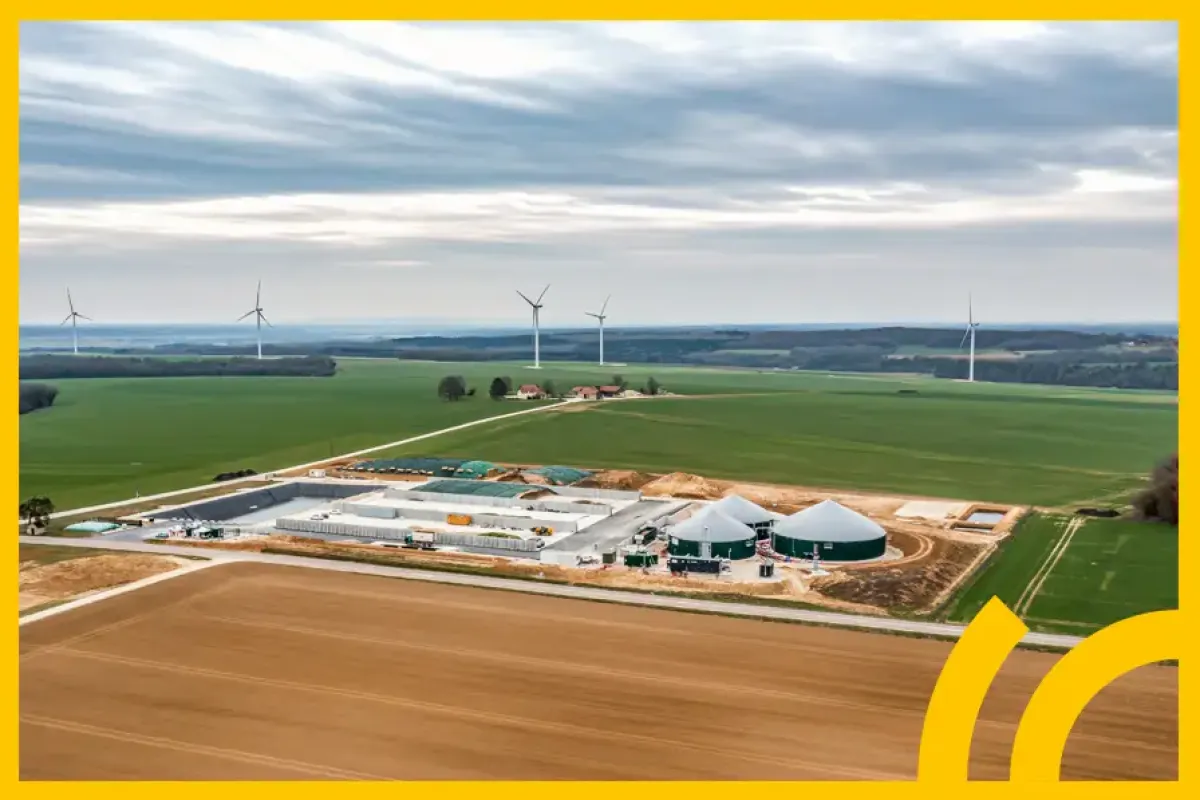
NaTran is upgrading its gas infrastructure to help achieve carbon neutrality: developing renewable gases and laying the groundwork for the hydrogen and CO2 sectors, with a focus on public service and the long term.
Comprendre notre vision en quelques clics
Quick access to the page's various sections: carbon neutrality, energy transition, documentation (2025 Voluntary Sustainability Report, 2025 Overview of Renewable Gas)...
Carbon neutrality
Accelerating the energy transition
Why commit to carbon neutrality by 2050?
NaTran is committed to achieving carbon neutrality by 2050, in line with the climate targets of France and the European Union, in its capacity as a gas transmission operator carrying out a public service mission.
Ambitious French and European decarbonisation targets
The European Green Deal sets a target of a 55% reduction in greenhouse gas emissions by 2030. In France, the Energy and Climate Law sets a target of carbon neutrality by 2050, as set out in the SNBC (sectoral pathway) and the PPE (organisation of the energy mix).
Decarbonisation strategies tailored to regions
These guidelines are implemented at local level through the schémas régionaux d'aménagement, de développement durable et d'égalité des territoires (SRADDET). NaTran contributes to this as an infrastructure operator:
- In rural areas, NaTran facilitates the injection of biomethane and contributes to the local circular economy.
- In industrial sectors, NaTran supports decarbonisation by ensuring access to renewable gases and paving the way for the roll-out of hydrogen and CCUS.
- The interconnected network ensures energy solidarity between regions and strengthens the resilience of the gas system at both national and European level.
How is NaTran tackling the challenge of decarbonisation?
NaTran is transforming its networks and operating methods to support the development of renewable and low-carbon gas and reduce the carbon footprint of the gas supply chain.
Renewable gases (biomethane, hydrogen) are intended to gradually replace fossil gas.
The 2024 Perspectives Gaz (Gas prospects) and the ADEME Transition(s) 2050 scenarios confirm that a fully renewable energy supply is achievable in France by 2050.
To make this scenario a reality, NaTran is taking concrete action on its network:
- Expansion of the supply of locally produced biomethane.
- Deployment of reverse system facilities to enable the transmission of biomethane when local networks are at capacity.
- Support for new gas-based technologies: biogas, pyrolysis, and hydrothermal gasification.
NaTran is also reducing its own emissions:
- 81% reduction in methane emissions since 2016,
- 37.9% reduction in GHG emissions in 2024 compared with 2019.
Low-carbon hydrogen and CO2 are complementary solutions for industrial sectors that cannot be electrified.
NaTran prepares its infrastructure for:
- Facilitating hydrogen transport, prioritising identified industrial areas.
- Supporting the development of CO₂ transport projects, in line with industrial and European strategies.
This planning process relies on calls for interest to anticipate actual needs and adapt networks in a gradual and secure manner.
Publication
What are NaTran’s strengths in accelerating the energy transition?
NaTran draws on its recognised expertise in industry, regional development and human resources to support the long-term transformation of the energy system.
Industrial and regional expertise supporting the transition:
- Recognised expertise in engineering, operations and R&D, driven in particular by NaTran R&I.
- An industrial network spanning over 32,500 km, interconnected across Europe.
- A public service role carried out within a regulated framework, ensuring safety, continuity and regional equity.
- The ability to engage with industry sectors, manufacturers and local authorities to support transition projects.
- The commitment of the company’s staff, who are key players in this transformation in the field.
What is the raison d’être of NaTran?
NaTran’s raison d’être reflects a long-term vision that stems directly from its public service mission: “Together, let’s make a secure, that is secure, affordable and climate-neutral". It has been included in the company’s articles of association since 2020.
NaTran2030: accelerating the energy transition and carbon neutrality
NaTran2030 sets out five priority objectives for 2030:
- Allocate more than 50% of annual investment to renewable gases, hydrogen and CO2.
- Increase the proportion of renewable gas transported fivefold.
- Roll out hydrogen and CO2 infrastructure across Europe: over 1,000 km of dedicated networks.
- Reduce NaTran’s carbon footprint by 40%, in particular by cutting methane emissions.
- Build skills to support the transformation of networks and technologies.
To go further:
Voluntary Sustainability Report 2025
Renewable Gas Panorama 2025
Three questions for Anthony Mazzenga, Head of Development at NaTran
Interview with Anthony Mazzenga, Head of Development. He discusses the role of new gases in the energy system and the role of NaTran infrastructure.

Why are new gases – biomethane, hydrogen and CO2 – set to play a major role in achieving carbon neutrality and ensuring France’s energy security?
The energy transition does not rely on a single solution. To decarbonise our economy effectively – particularly in the areas of heating, heavy transport and industrial processes that are difficult or impossible to electrify – we need a range of complementary solutions. Renewable and low-carbon gases are an integral part of this.
Biomethane enables the production of local, renewable and circular energy, whilst utilising waste. Low-carbon hydrogen is a key driver in decarbonising certain industrial sectors, such as the chemical industry and steel production. As for CO2, its capture, transport and storage or utilisation are essential for reducing residual emissions from industry, particularly in the production of lime and cement.
These three areas are therefore concrete and essential pillars of carbon neutrality, supporting energy security and industrial competitiveness.
What role does NaTran play in the development of these new gases and their infrastructure?
NaTran is at the heart of this transformation. Historically specialising in the transport of natural gas, the company now applies this unique industrial and regional expertise to the gases of the energy transition.
In practical terms, we design, develop and operate infrastructure capable of transporting biomethane produced locally, preparing networks for hydrogen, and establishing future CO2 transport corridors, both in France and across Europe.
Our role is to connect producers with users, secure flows, and ensure infrastructures are reliable, safe and high-performing. This also requires close collaboration with local authorities, industry, public bodies and our European partners, as these infrastructure projects are long-term in nature and form part of a wider regional planning strategy.
How does the transport of biomethane, hydrogen or CO2 transform industries and networks compared to natural gas?
These new gases build on the legacy of the gas network, but they also require changes to the network and to the skills involved. Each molecule has its own technical, regulatory and operational characteristics. Hydrogen, for example, requires adaptations to materials and equipment; CO2 requires dedicated infrastructure and has safety characteristics very different from those of combustible gases.
At NaTran, we invest heavily in innovation, R&D, staff training and the engineering of complex projects. We adapt our tools, methods and expertise to keep pace with these changes, whilst maintaining the high standards of safety and reliability that are the hallmark of gas networks.
It is this ability to drive the evolution of a major infrastructure operator – by transforming its business lines and networks to support the energy transition and national sovereignty – that is now one of NaTran’s key strengths in delivering success for its customers and the regions it serves.