Partnership with the Regional Chamber of Agriculture
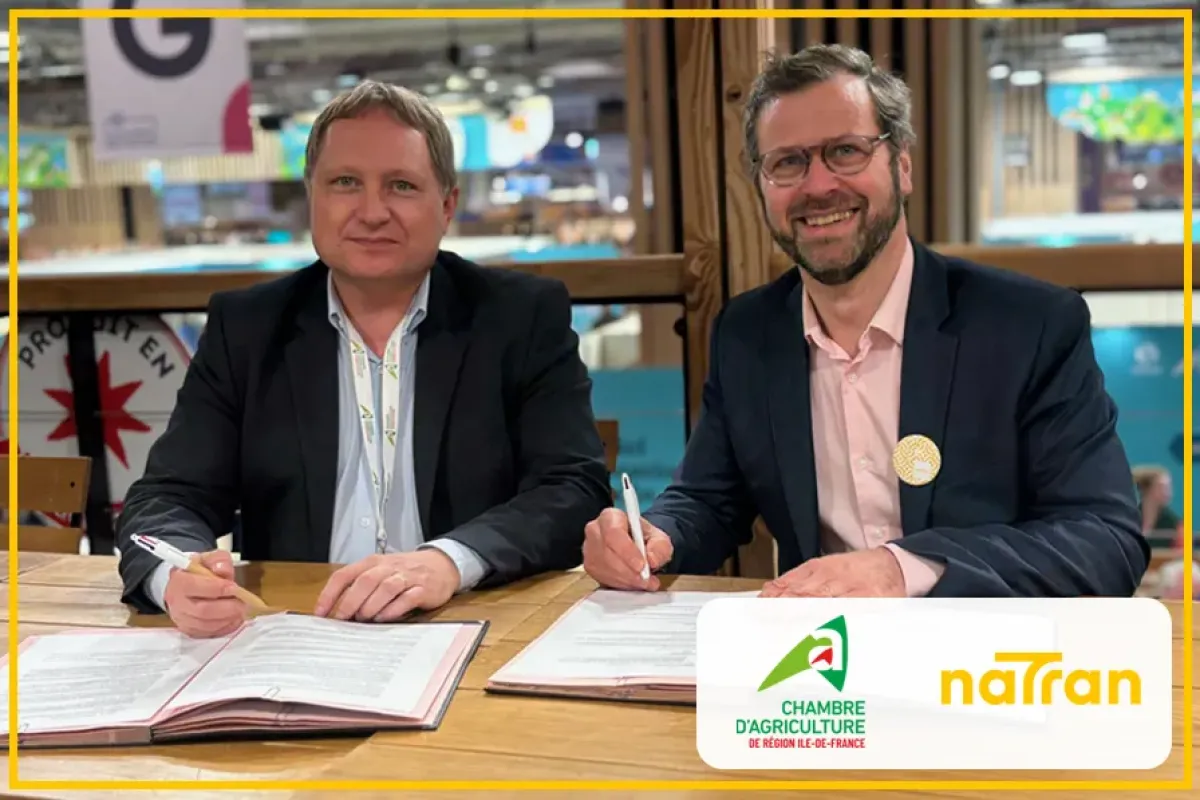
On 27 February 2026, Damien Greffin, President of the Île-de-France Regional Chamber of Agriculture, and Pierre Monin, Regional Delegate for Val de Seine at NaTran, signed a partnership agreement for 2026-2027 to boost the growth of anaerobic digestion in the region.
Develop methanization projects
The partners officially announced their cooperation at the Paris International Agricultural Show, which adopted the theme “Solutions Generations” for this year’s 62nd edition. The partnership is fully in line with the spirit of this theme, as it aims to boost support for farmers in the Paris region in developing anaerobic digestion projects and thus support the growth of this sector, which contributes to the resilience of farming and energy transition in the region by producing local, 100% renewable gas.
A partnership dedicated to agricultural projects and innovation
This partnership is part of a clear decarbonisation strategy. The third multi-year energy plan (PPE3), published on Friday 13 February, confirms the role of renewable gases, with an injection target of 44 TWh of biomethane in 2030 and 47 to 82 TWh in 2035.
To meet this biomethane production target set by PPE3 and provide the impetus needed to meet these objectives, the Île-de-France Regional Chamber of Agriculture and NaTran have decided to team up. They aim to boost the implementation of support and training on anaerobic digestion for farmers, set up trials on associated farming practices, and strengthen regional coordination within the sector.
The challenge is to transform the many emerging projects into agricultural anaerobic digestion units that actually inject biomethane into the networks.
“This partnership will boost the Chamber of Agriculture’s support for project developers and, more broadly, for farmers interested in agricultural anaerobic digestion."Damien Greffin
President of the Île-de-France Regional Chamber of Agriculture
"Through this partnership, we want to support the implementation of appropriate and innovative actions that will enable us to support anaerobic digestion projects..."Pierre Monin
Délégué Territorial Val de Seine, NaTran
Supporting the growth of the agricultural anaerobic digestion sector in the Paris region
The commitments of the Ile-de-France Regional Chamber of Agriculture in favor of agricultural methanization
The Île-de-France Regional Chamber of Agriculture has been committed for several years to promoting the emergence and successful completion of agricultural anaerobic digestion projects. Through its local roots among farmers and its privileged relationship with local authorities, it plays an essential role in supporting project developers: raising awareness among public and agricultural stakeholders, coordinating the regional anaerobic digestion development plan, organising training courses and information sessions, and highlighting the technical, economic and environmental issues related to this activity.
“This partnership will boost the Chamber of Agriculture’s support for project developers and, more broadly, for farmers interested in agricultural anaerobic digestion. Our goal is to support the diversification of farms in the Paris region, most of which are highly specialised, in order to increase income for farmers. While contributing to the energy transition, agricultural anaerobic digestion is a driver for farm resilience,” Damien Greffin, President of the Île-de-France Regional Chamber of Agriculture.
NaTran's actions to develop the methanization sector
NaTran, an operator committed to the energy transition, supports the development of the anaerobic digestion sector on several levels: connecting renewable gas production facilities, developing innovative solutions to accommodate as much renewable gas as possible in the networks, and planning future grid upgrades to support the sector in an inter-operator approach. As part of its business plan, NaTran aims for a fivefold increase in the share of renewable gases in the networks by 2030.
“Renewable gases contribute to a more sustainable, local and resilient energy system. Through this partnership, we want to support the implementation of appropriate and innovative actions that will enable us to support anaerobic digestion projects through to their successful completion, thus helping to build a sustainable and robust sector that will benefit the region, the resilience of farms in the Paris region and energy sovereignty,”, Pierre Monin, Regional Delegate for Val de Seine, NaTran.
A strategic sector for agriculture and energy transition in the Paris region
A strategic sector for agriculture and energy transition in the Paris region
The Île-de-France region has 63 anaerobic digestion sites injecting biomethane into the gas networks. This represents 1.3 TWh of biomethane a year, equivalent to the consumption of approximately 311,000 homes (based on new homes: 4 MWh/year). Île-de-France is the leading region for biomethane use as a fuel for passenger transport, with approximately 4,500 buses and coaches currently running on bioNGV, thus helping to improve air quality.
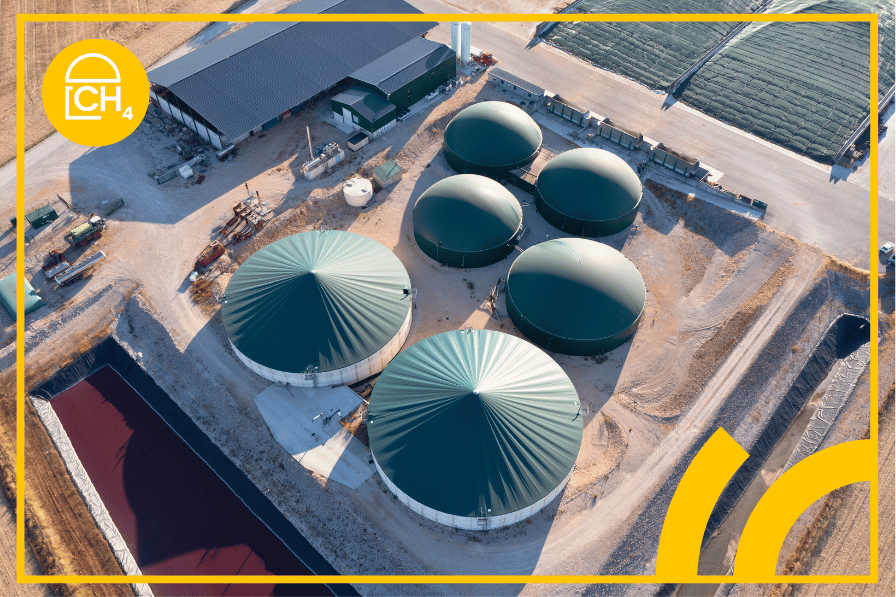
Anaerobic digestion consists in processing organic matter from various sectors: agriculture, industry, catering waste, municipal waste, etc.
Once collected and transported to the anaerobic digestion site, the organic matter is sorted, stirred and heated for several weeks in a digester (an oxygen-free chamber). Anaerobic digestion of the organic matter produces biogas. Once purified, it has the same qualities as natural gas and can be injected into gas networks to supply renewable energy to households, manufacturers and regions. It is referred to as “biomethane”, or “bioNGV” when it is intended to power vehicles.
Anaerobic digestion is a virtuous model of local circular economy. While farmland provides the raw materials for renewable, low-carbon gas production, it also benefits from the anaerobic digestion process. It creates a co-product, digestate, which is an effective organic fertiliser for crops. Anaerobic digestion is a driver of resilience for farms, particularly given the current high cost of nitrogen-based fertilisers.
Learn more about the methanization and renewable gas sector
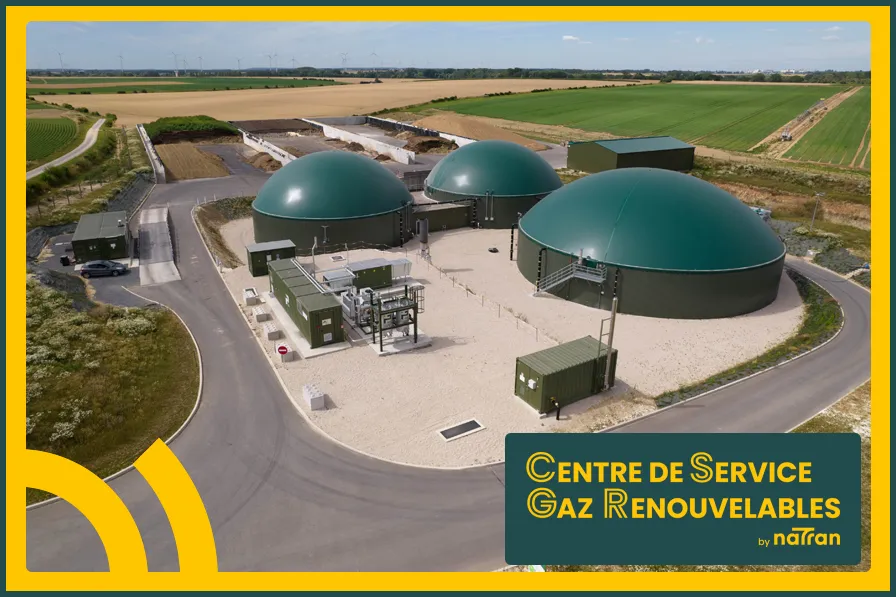
NaTran Renewable Gas Service Centre