


NaTran Renewable Gas Service Centre
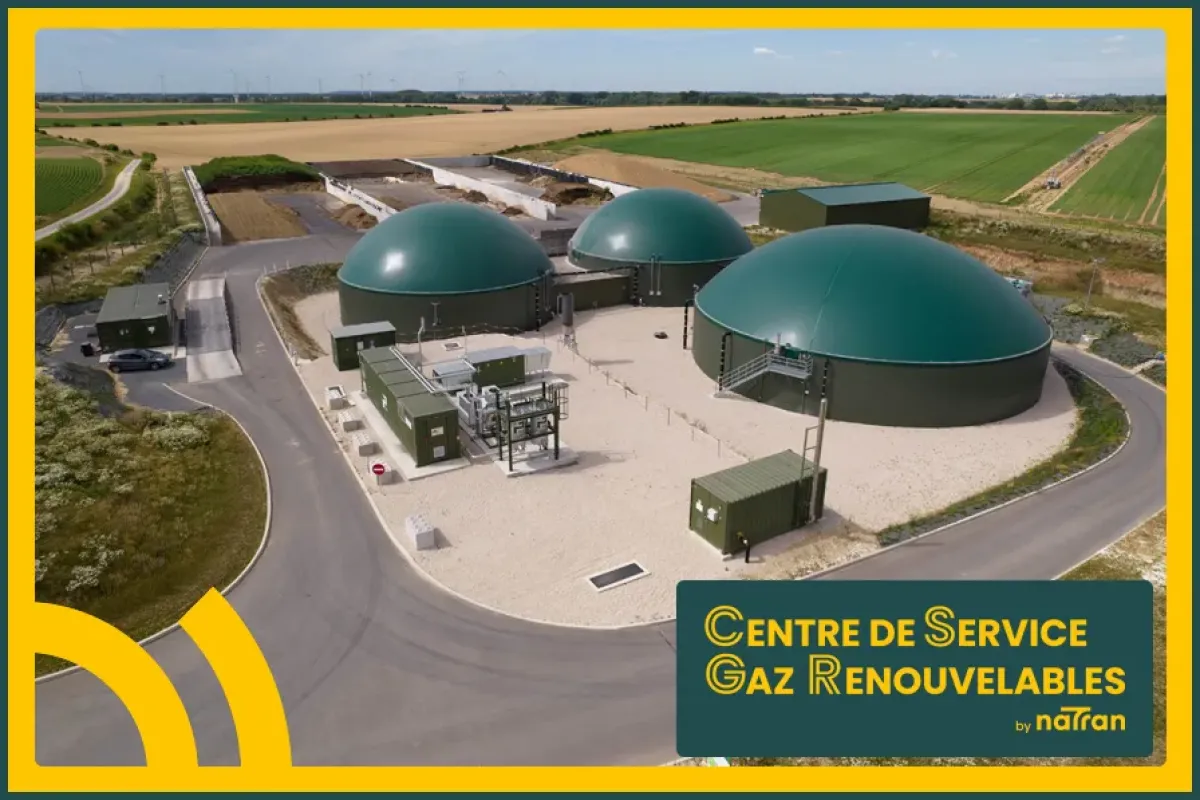
Created by NaTran to meet the needs of biomethane producers, the Renewable Gas Service Centre (CSGR) moved from a testing phase to nationwide deployment at the end of 2025. The aim is to improve quality of service, simplify technical exchanges and enhance the satisfaction of customers connected to the network.
Better meet the needs expressed by biomethane producers
Between 2018 and 2020, the number of biomethane units connected to the NaTran network grew rapidly, and now stands at around one hundred. During this ramp-up of the sector, producers expressed their need for clear information, responsiveness and coordination to better manage technical hazards occurring at injection stations, notably with gas quality measurement or odorising systems. Until now, if they had a question or a breakdown, producers would call the people they were in contact with… who weren’t always the most appropriate. This fragmented operation ultimately generated complexity, variable timeframes for restoring service and a level of satisfaction that could be improved.
“This approach aims to improve our responsiveness, reduce the impact of interventions and make our action clearer for the benefit of the customers”Hervé Golieth
Délégué Préparation de l’avenir à la Direction des opérations
A dedicated service centre to streamline exchanges
In response to this problem, NaTran has therefore created the Renewable Gas Service Centre (CSGR): a single technical and commercial point responsible for managing the relationship with connected producers. "The idea was to offer producers a single point of contact, capable of ensuring an ongoing relationship on technical issues", explains Hervé Golieth, Delegate for Preparing for the Future in the Operations Division.
In fact, the role of the CSGR is to receive complaints, plan maintenance operations, coordinate interventions and keep the producer informed of progress until service is restored. “This approach aims to improve our responsiveness, reduce the impact of interventions and make our action clearer for the benefit of the customers”, continues Hervé Golieth.
A successful test phase
To size the team and validate the model, NaTran first ran a test in the Grand Est and Hauts-de-France regions, on a group of 54 customers, from September 2024 to June 2025. The results have been conclusive: surveys show that producer satisfaction rates have improved, and internal teams have also expressed relief. By centralising requests, the CSGR has made it possible to reduce the operational workload of many departments.
Based on these results, NaTran has decided to extend the scope of the CSGR to the whole territory from its centre in Nancy. The team is now made up of five people, with profiles combining technical skills, customer relations and a culture of operations.
A structuring service for the industry
Alongside simplifying the relationship with producers, the CSGR’s increased powers provide a technical lever for the sector. Ultimately, its knowledge of operations, incidents and interventions will allow it to produce feedback, support operators in establishing the diagnosis and help reduce repair times. “The aim is to make CSGR a true technical reference for biomethane”, stresses Hervé Golieth.
CSGR is part of NaTran's renewable gas development strategy, which aims to support the ramp-up of biomethane by guaranteeing reliable injection into the grid. By improving the quality of service and operational performance of injection stations, the CSGR secures operations for producers, makes connections more attractive and supports the sector's growth momentum in the regions. Dimensioned to manage between 120 and 130 installations in the medium term, it can anticipate the arrival of new connected production sites by 2026–2028.