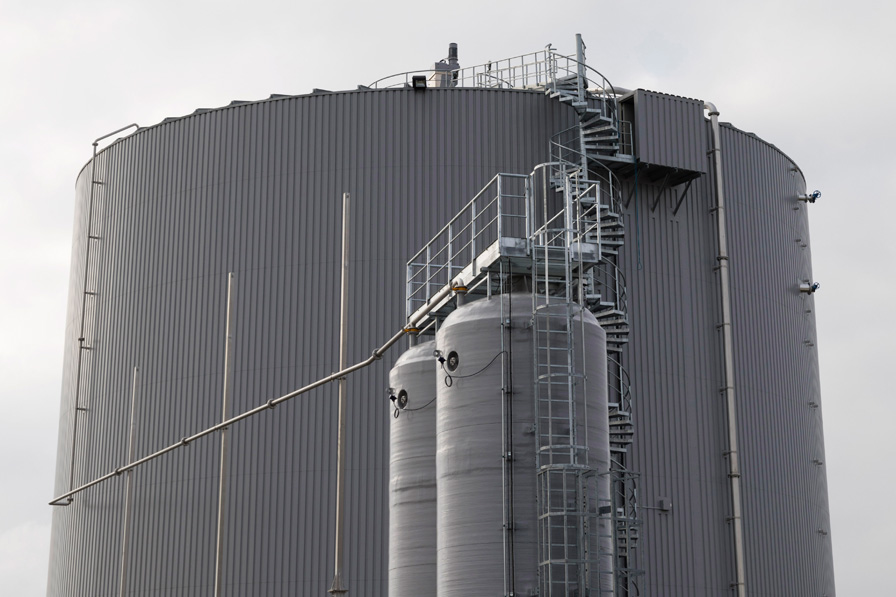
We are contributing to security of supply
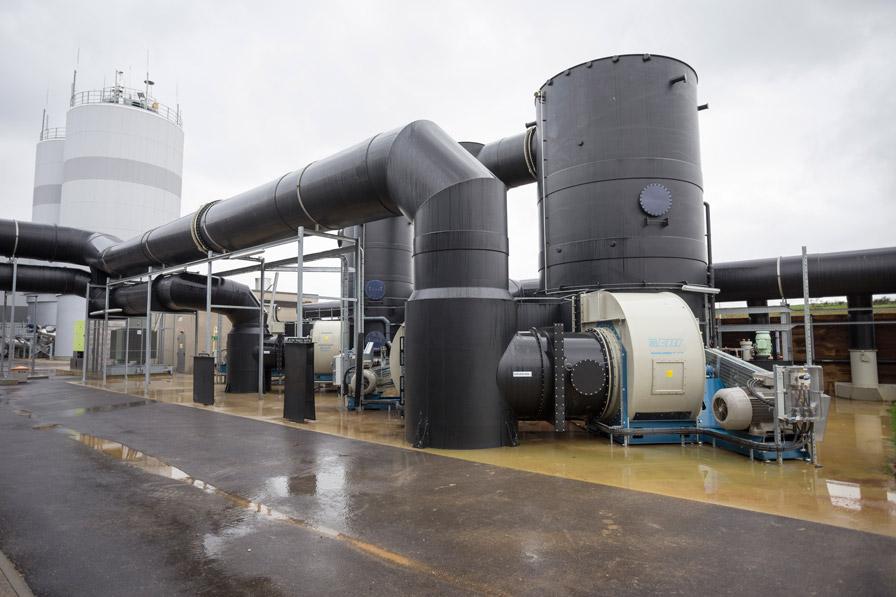
Throughout France, we are regularly producing more renewable gases. By injecting them into the gas infrastructure that connects the regions we can guarantee sufficient national availability at any given time.
The gas network, a real spider web
It covers more than 250,000 km throughout France. It consists of transmission networks whose function is to connect the various national and regional French interconnection points, and to supply energy directly to large industrial sites, storage sites and distribution networks. Distribution networks, meanwhile, supply the end customers, i.e. approximately 11 million private individuals, businesses and industrial customers, spread across 9,500 municipalities1.
The number of grid injection points is increasing
To supply this vast gas network, the number of biomethane injection points is constantly increasing across the country. Currently in 2020, there are 150 of them. This represents a production of 2,637 GWh/year , i.e. the energy required to heat nearly 450,000 households or to fuel around 10,500 buses2 . By 2030, the Agency for Ecological Transition (ADEME) expects to have 1,400 grid injection facilities. This would allow 30 TWh of biomethane to be injected into the network, with the capacity to heat 2,500,000 households, or to fuel 190,000 trucks3
Storage to ensure better availability
Storage involves keeping reserves of energy stored outside of the production site for later use. These reserves play a major role in the functioning and security of France’s gas supply. They are especially needed to respond to peaks in consumption during extremely cold weather.
In France, there are 13 underground storage sites with a total capacity of 144 TWh, i.e. approximately one third of the country’s annual gas consumption.
Due to the increasing number of grid injection points, the extent of gas networks and the available storage capacity, renewable gases are coming to the fore as a reliable solution to contribute to our energy independence.
1 Source : FranceBiométhane
2 Source : GRDF
3 Source : GRDF/ ADEME
Key figures for the gas network in France
- 250,000 km of gas network
- 11 million customers supplied
- 13 underground storage facilities
- 144 TWh of storage capacity
Questions - réponses sur la sécurité d’approvisionnement en gaz en France
La France sécurise son approvisionnement en gaz grâce à un réseau gazier interconnecté, des sites d’injection de biométhane et des capacités de stockage souterrain. Ces infrastructures permettent d’acheminer le gaz sur tout le territoire et d’assurer une disponibilité constante, notamment lors des périodes de forte consommation hivernale.
Le stockage de gaz permet de constituer des réserves d’énergie pour répondre aux variations de la demande. Lorsque la consommation augmente, notamment en hiver, les stocks peuvent être mobilisés rapidement. Ce système garantit la sécurité d’approvisionnement énergétique et contribue à la stabilité du réseau gazier.
Oui. Les gaz renouvelables comme le biométhane peuvent être injectés directement dans le réseau gazier. Ils permettent de diversier les sources d’énergie, de réduire la dépendance aux importations et de soutenir la transition énergétique. Leur développement contribue ainsi à renforcer la sécurité d’approvisionnement en gaz.