2025 Renewable and Low-carbon
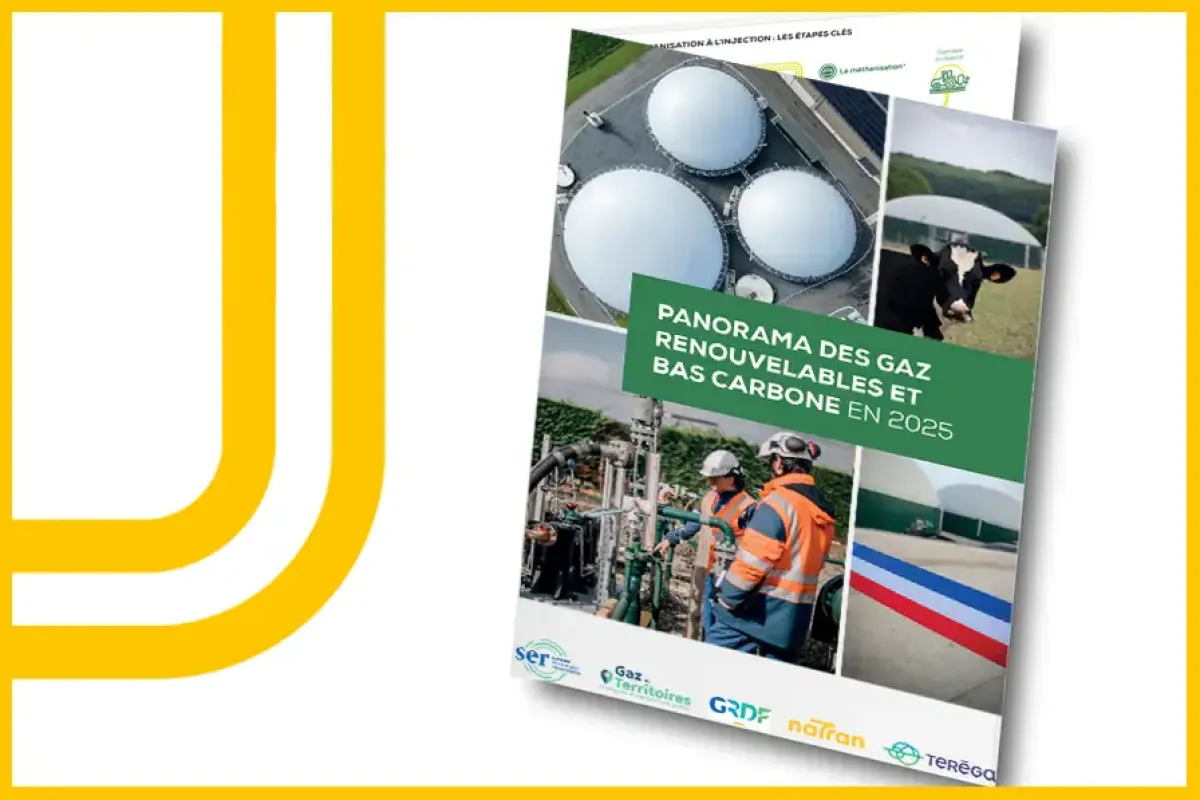
France reaffirms its position as the European leader in renewable and low-carbon gases, with a total installed biomethane injection capacity of 15.6 TWh as of late 2025, equivalent to the output of 2.5 nuclear reactors. The country is thus successfully advancing its goals of decarbonisation, energy sovereignty and system resilience.
Record number of new projects in 2025
Last year saw a record number of projects launched within the sector. However, the absence of long-term clarity regarding biogas production certificates (BPC) beyond 2028 threatens to halt this progress, putting at risk both prior investments and the ability to meet the targets set out in the multiannual energy programme (PPE 3) for 2030. Complementing electricity and renewable heat, the renewable gases sector plays a critical role in decarbonising buildings, industry and transport, while enhancing the flexibility of the energy system by utilising existing storage capacities and infrastructure.
Reducing France's dependence on fossil gas
“Amid escalating political tensions, renewable and low-carbon gases offer a tangible solution to lessen France’s reliance on fossil gas, reduce its vulnerability to international markets, strengthen its energy sovereignty and enhance resilience across its regions. Local production creates value at the regional level, and methanisation also produces digestate, reducing farmers’ dependence on imported chemical fossil fertilisers, as well as biogenic CO2, which is vital for industrial decarbonisation and the production of synthetic fuels. However, without the continuation of biogas production certificates beyond 2028, the entire investment strategy for the sector will be jeopardised, despite PPE 3 setting ambitious targets in this domain. The sector is therefore urging the government to issue, by mid-July 2026, the decree setting a clear and stable trajectory for the CPB through to 2035,” stated Jules Nyssen, president of the Syndicat des énergies renouvelables (Renewable Energies Union) as he presented the 11th edition of the Renewable and Low-carbon Gas Overview to the press.
44 TWh by 2030: ambitious yet achievable, provided necessary resources are secured
Alongside other renewable energy sources, renewable and low-carbon gases play a vital role in the decarbonisation of France’s energy mix. The latest multiannual energy programme (PPE 3) has set an ambitious target of injecting 44 TWh of biomethane into the national networks by 2030, with a further increase to 82 TWh by 2035. This goal underscores France’s ability to develop local, decarbonised, storable and controllable energy, which is key to enhancing the country's energy sovereignty and strengthening the resilience of its energy system. However, the sector’s success hinges on securing the necessary resources. Although these targets provide clear direction, initiatives cannot progress without adequate economic and regulatory certainty to attract investors, secure funding and allow project developers to initiate new projects.
In 2025, methanisation demonstrates its capacity for expansion
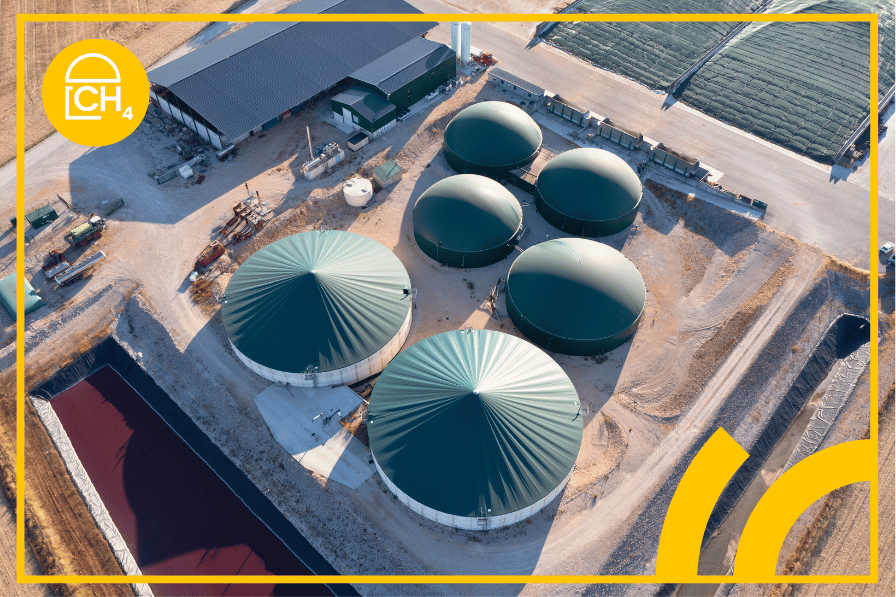
Methanisation has become the main driver for the development of renewable gases.
It enables the recovery of organic waste, supports agricultural activities and produces biomethane, digestate and biogenic CO2, essential co-products for industrial decarbonisation. In 2025, the biomethane injection programme received a significant boost with the commissioning of 72 additional sites, bringing the total number of installations connected to gas networks to 803. The operational portfolio reached an installed capacity of 15.6 TWh per year, delivering a production of 13.6 TWh in 2025, which represents 3.9% of France’s gas consumption. In addition to this base, there are 19.2 TWh in the pipeline, raising the total registered capacity to 34.7 TWh per year.
BPC: investment at risk without long-term clarity
Biomethane production certificates (BPC) came into effect on 1 January 2026, but their application is limited to the period 2026–2028. This restrictive timeframe fails to support projects amortised over more than ten years, creating significant financing challenges.
The absence of a clear framework beyond 2028 is already hindering investment decisions. Since the feed-in tariff was redirected in late 2020 towards installations producing less than 25 GWh per year, larger-scale projects have been left without sustainable financing options outside the BPC scheme. As a result, new projects are on hold, even though nearly 100 cogeneration plants could be converted early to biomethane injection, potentially representing over €200 million of investment across various regions. Additionally, older installations reaching the end of their contracts should be offered clear, long-term prospects. Without an appropriate and stable regulatory framework, these projects remain stalled, deferred or at risk. Given that the eligible volume under the feed-in tariff is capped at 800 GWh per year and complementary measures such as the Incentive for the Reduction of the Carbon Intensity of Fuels (IRICC) are not yet fully operational, further delays in announcing the post-2028 BPC roadmap risk undermining an industrial, agricultural and regional momentum poised for growth. The sector therefore demands the publication by mid-July 2026 of a decree setting a clear and credible BPC roadmap to 2035.
New technologies poised to reach an industrial breakthrough
Beyond methanisation, pyrogasification, hydrothermal gasification and power-to-methane are broadening the horizons of renewable and low-carbon gases by leveraging complementary resources and diversifying production methods. This expansion also aims to integrate the potential of renewable hydrogen within the energy systems of tomorrow.
Already in demonstration and deployment phases, these solutions now require robust support to achieve new industrial milestones and fully contribute to France’s energy and climate objectives. The commissioning in 2025 of Denobio, France’s first power-to-methane facility injecting gas into the network, exemplifies this rapid progress and the increasing synergy between renewable electricity, renewable hydrogen, biogenic CO2 and gas infrastructures.
Scaling up biogenic CO2 is also contingent on better organisation of its flows, a crucial factor to effectively connect production sites with industrial applications and, ultimately, sequestration solutions.
Gas infrastructure driving rapid and effective decarbonisation
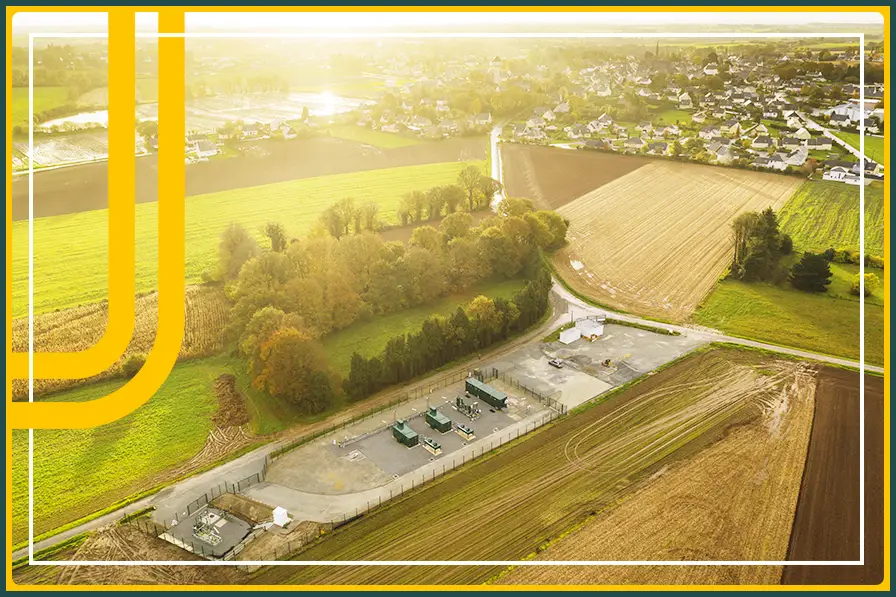
Renewable and low-carbon gases present a distinct advantage: they can be injected into existing infrastructure with controlled investment to serve all key applications, including heating, industry and transport.
With the development of more robust networks and reverse flow stations at the interface between transmission and distribution systems, France’s gas infrastructure is well-positioned to store, transport and manage locally and continuously produced biomethane nationwide. In this regard, biomethane represents a concrete solution that provides flexibility and supports immediate decarbonisation. Consumers can now subscribe to biomethane offers through their suppliers, reducing their carbon footprint without needing to modify their current installations.
Communiqué et présentation à la presse
Publications
Press contact
En savoir plus sur les gaz renouvelables et bas-carbone