


GRTgaz adds 48 SEAT LEON TGIs to its vehicle fleet
GRTgaz is gradually taking receipt of the 48 Leon TGI natural gas vehicles (NGVs) that it has ordered from SEAT. These will be distributed across GRTgaz’s technical and tertiary sites throughout France, in addition to the 185 NGV service vehicles currently in circulation (out of a total fleet of 1,186). This is one of the largest orders of NGV/bioNGV light-duty vehicles made with the Spanish brand by a French company.
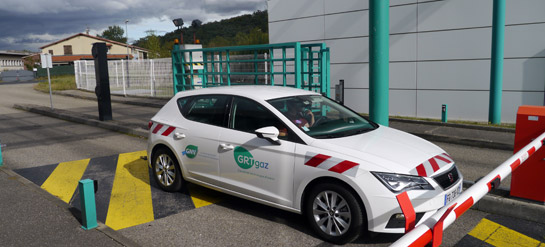
The Leon TGI is manufactured at SEAT’s plant in Martorell, Spain. It has a new 1.5-litre TGI engine and three gas tanks, providing significant range. Its capacity of 17.7 kg of gas equates to a range of 480 km in NGV mode. As with other vehicles in the SEAT NGV range, the Leon TGI Evo only uses petrol as an alternative fuel when the NGV tanks are empty. The switch to petrol is automatic and provides an additional range of 140 km. SEAT is a pioneer in the use of NGV technology, offering customers a wide choice of cleaner, more sustainable and more efficient vehicles. The brand achieves this via one of the most comprehensive NGV ranges on the market, including the Mii Ecofuel, the Ibiza TGI, the Arona TGI and the Leon TGI. Both the Arona TGI and the Leon TGI are sold in France.
In 2015, GRTgaz committed to converting its fleet of light-duty and commercial vehicles into NGVs. The company has set itself the goal of renewing all eligible vehicles in its fleet with gas-fuel engines by 2020, with 235 NGVs on the road by next December. In 2018, the proportion of bioNGVs in GRTgaz’s gas-fuel consumption was 10%, avoiding 45 tonnes of CO2 emissions.
“The choice to integrate virtuous NGV and bioNGV vehicles into our fleet is a real strategic commitment, and above all an obligation to improve air quality for all of us. The success of a commitment such as this depends on getting all sector players involved, including fleet managers, manufacturers, refuellers and public authorities,” states Valérie SLAWEK, Head of the GRTgaz Vehicles Department.
With its ability to combine low CO2 emissions1, low pollutant emissions2, affordable costs and everyday usability, vehicle performance and range, NGV/bioNGV is already an available means to improve air quality, combat global warming and reduce our dependence on petroleum products. Since July 2016, vehicles running on NGV/bioNGV have been certified according to the EURO 6 “Crit’Air 1” anti-pollution standard. They are not subject to driving bans during pollution peaks or in low emission zones.
The Auvergne-Rhône-Alpes region has 25 out of France's 146 operational NGV/bioNGV fuelling stations, and six in the planning stages. As such, it is one of France’s most dynamic regions in the development of the gas fuelling system. Between 2017 and 2018, NGV/bioNGV consumption increased by 50% in this area that includes one-third of France's temporary and permanent environmental zones.
1 -16% CO₂ emissions compared to diesel for heavy goods vehicles and up to -80% CO₂ compared to diesel with bioNGV.
2 Up to -70% nitrogen oxide emissions compared to diesel, and no fine particle emissions that can be measured using current technologies.